



Home > Map of Kauai
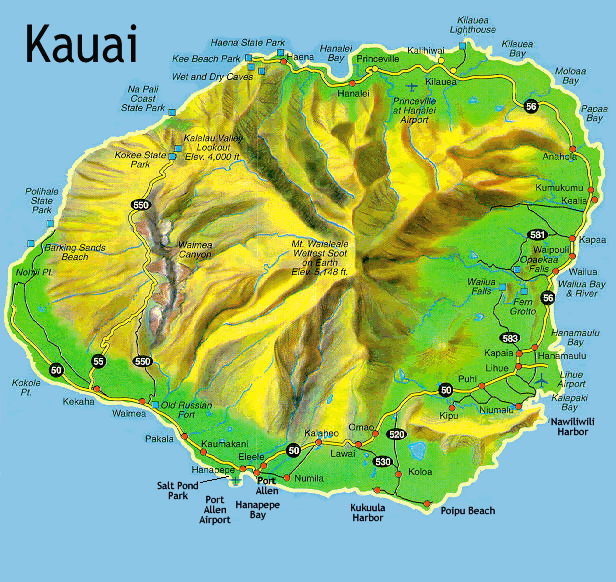
The island of Kaua'i is about 40 miles by 40 miles - not very large at all. In spite of its small size, it has many micro-climates so that there is desert and rain forest in the same little island. In fact. traditionally Mt. Wai'ale'ale is considered "the wettest spot on earth." The average rainfall on the mountain is 460 inches per year, and the record was 683 inches recorded in 1982. Luckily, the mountain is in the middle of island. It is perfectly situated to pick up the moisture from the tradewinds.
Most of the island is uninhabited. Only the road that encircles the island has significant population centers. The largest towns are Lihue and Kapa'a. The sunniest part of the island is Poipu, while the wettest part is Hanalei on the north shore. The road ends at Haena on the north shore and at Polihale on the south shore. Between these points run the magnificent Napali cliffs. Although the valleys that run along these cliffs are today uninhabited, in ancient times they were home to thousands of Hawaiians. At that time, islands were cut into regions called ahupuaa, which were essentially pie-wedge shaped slices of the island that provided all that was needed. The shoreline provided fish. shellfish and seaweed; the middle lands were planted with taro, bananas, sweet potatoes and other crops; the highlands provided hardwoods for canoes, bird feathers and fruit. The royalty of ancient Kaua'i lived in the Wailua area. Wailua means "two waters" as two rivers fed from the waters of Mt. Wai'ale'ale flow together. Many famous movies such as Jurassic Park, King Kong, Six Days/Seven Nights, and Raiders of the Lost Ark have been filmed on Kaua'i due to its wonderful and breathtaking scenery.
Most of the island is uninhabited. Only the road that encircles the island has significant population centers. The largest towns are Lihue and Kapa'a. The sunniest part of the island is Poipu, while the wettest part is Hanalei on the north shore. The road ends at Haena on the north shore and at Polihale on the south shore. Between these points run the magnificent Napali cliffs. Although the valleys that run along these cliffs are today uninhabited, in ancient times they were home to thousands of Hawaiians. At that time, islands were cut into regions called ahupuaa, which were essentially pie-wedge shaped slices of the island that provided all that was needed. The shoreline provided fish. shellfish and seaweed; the middle lands were planted with taro, bananas, sweet potatoes and other crops; the highlands provided hardwoods for canoes, bird feathers and fruit. The royalty of ancient Kaua'i lived in the Wailua area. Wailua means "two waters" as two rivers fed from the waters of Mt. Wai'ale'ale flow together. Many famous movies such as Jurassic Park, King Kong, Six Days/Seven Nights, and Raiders of the Lost Ark have been filmed on Kaua'i due to its wonderful and breathtaking scenery.